
Roof replacement financing plans offer homeowners a lifeline when faced with the daunting task of replacing their roof. This comprehensive guide dives into the world of financing options, shedding light on the challenges, benefits, and factors to consider when embarking on such a project.
As we delve deeper into the realm of roof replacement financing plans, readers will uncover valuable insights and practical advice to navigate this crucial aspect of home maintenance with confidence.
Introduction to Roof Replacement Financing Plans
When it comes to replacing a roof, financing options play a crucial role in helping homeowners manage the costs effectively. Whether due to unexpected damages or regular wear and tear, having access to flexible payment plans can make a significant difference in the overall process.
Common Challenges Homeowners Face
- High upfront costs: Roof replacements can be expensive, and not all homeowners have the funds readily available to cover the entire cost.
- Unforeseen repairs: Sometimes roof replacements are needed urgently due to sudden damages, leaving homeowners with little time to gather the necessary funds.
- Credit limitations: Some homeowners may face challenges securing traditional loans or credit lines for roof replacements due to credit score or financial history.
Benefits of Flexible Payment Plans
- Manageable monthly payments: Flexible financing options allow homeowners to spread out the cost of roof replacements over time, making it easier to budget.
- Quick access to funds: With financing plans in place, homeowners can proceed with necessary roof replacements promptly, addressing any safety concerns without delay.
- Improved property value: Investing in a new roof not only enhances the aesthetic appeal of a home but also increases its overall value, making it a worthwhile long-term investment.
Types of Roof Replacement Financing Plans

When it comes to financing a roof replacement, there are several options available to homeowners. Each option has its own set of advantages and considerations, so it's essential to understand the differences between them.
Personal Loans
Personal loans are a common way to finance a roof replacement. These loans typically have fixed interest rates and repayment terms, making it easier to budget for the project. However, personal loans may require a good credit score to qualify, and interest rates can vary depending on the lender.
Home Equity Loans
Home equity loans allow homeowners to borrow against the equity in their home to fund a roof replacement. These loans often have lower interest rates compared to personal loans, but they require using your home as collateral. Additionally, there may be closing costs associated with taking out a home equity loan.
Credit Cards
Using a credit card to finance a roof replacement is another option, especially for smaller projects. While credit cards offer convenience and flexibility, they often come with higher interest rates compared to other financing options. It's important to consider how quickly you can pay off the balance to avoid accumulating high-interest charges.
Specialized Financing Plans
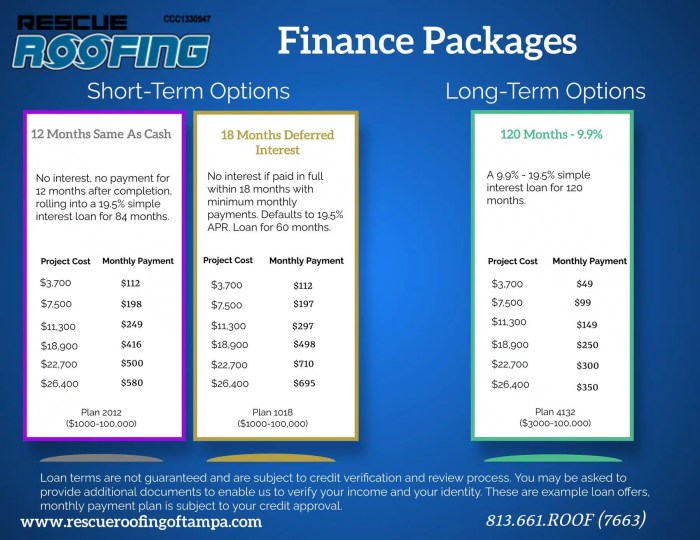
Some roofing companies offer specialized financing plans to help homeowners cover the cost of a roof replacement. These plans may include promotional interest rates, deferred payment options, or financing with no money down. It's essential to carefully review the terms and conditions of these plans to ensure you understand the costs involved.
Government Programs and Incentives
In some cases, there may be government programs or incentives available to help with financing roof replacements. These programs can vary depending on your location and may include tax credits, grants, or low-interest loans. Researching available programs in your area can help offset some of the costs associated with a roof replacement.
Factors to Consider When Choosing a Financing Plan
When choosing a financing plan for your roof replacement, there are several key factors to consider that can impact the overall cost and terms of the financing. Understanding these factors can help you make an informed decision that aligns with your financial situation and goals.Interest Rates, Repayment Terms, and Eligibility Requirements:
Interest Rates
- Interest rates play a crucial role in determining the total amount you will pay over the life of the loan. Lower interest rates can result in significant savings, while higher rates can increase the overall cost of the financing.
- Comparing interest rates offered by different lenders can help you choose a financing plan with the most competitive terms.
Repayment Terms
- Repayment terms refer to the duration of the loan and the frequency of payments. Longer repayment terms may result in lower monthly payments but can lead to higher overall interest costs.
- Shorter repayment terms typically mean higher monthly payments but can result in substantial savings on interest.
Eligibility Requirements
- Each financing plan may have specific eligibility requirements, such as credit score, income level, and debt-to-income ratio. Understanding these requirements can help you determine if you qualify for the financing.
- Meeting the eligibility criteria can increase your chances of securing favorable financing terms.
Impact of Credit Scores on Securing Favorable Financing:
Credit Scores
- Your credit score plays a significant role in determining the interest rate and terms of the financing you qualify for. A higher credit score can help you secure lower interest rates and better repayment terms.
- Improving your credit score before applying for financing can potentially save you thousands of dollars over the life of the loan.
Choosing the Right Financing Plan and Its Impact on Overall Cost:
Overall Cost
- Choosing the right financing plan can have a substantial impact on the overall cost of your roof replacement. By selecting a plan with lower interest rates and favorable repayment terms, you can save money in the long run.
- Comparing different financing options and understanding how each plan affects the total cost can help you make a well-informed decision that aligns with your budget and financial goals.
Steps to Secure Roof Replacement Financing

When it comes to securing financing for a roof replacement, there are several important steps to keep in mind. From applying for the loan to negotiating terms with lenders, here is a comprehensive guide to help you through the process.
Applying for Financing
- Start by researching different lenders and loan options available for roof replacement financing.
- Gather all necessary documents such as proof of income, credit score, and information about the property.
- Submit your application to the selected lenders and wait for their response.
- Provide any additional information or documentation requested by the lenders to complete the application process.
Negotiating Terms with Lenders
- Compare offers from different lenders and negotiate for better interest rates and repayment terms.
- Be prepared to discuss your financial situation and provide reasons why you are a reliable borrower.
- Ask for clarification on any terms or conditions that you do not understand before agreeing to the loan.
- Consider getting a co-signer if you have a lower credit score to improve your chances of securing better financing options.
Reviewing Contracts and Understanding Terms
- Before signing any contracts, carefully review all terms and conditions of the loan agreement.
- Make sure you understand the interest rates, repayment schedule, and any penalties for late payments.
- Seek legal advice if needed to ensure you are fully aware of the implications of the financing agreement.
- Keep a copy of all documents related to the loan for your records and reference.
Case Studies or Examples of Successful Roof Replacement Financing
When it comes to roof replacement financing, real-life examples can provide valuable insights into how homeowners have effectively utilized different financing plans to save money and achieve successful outcomes for their projects.
Example 1: Strategic Financing Decisions
One homeowner, facing the need for a complete roof replacement due to storm damage, carefully evaluated various financing options. By choosing a plan with a low-interest rate and favorable terms, they were able to save thousands of dollars in interest payments over the life of the loan.
This strategic decision not only reduced the overall cost of the project but also allowed for the installation of high-quality roofing materials that improved the home's value.
Example 2: Tailored Financing Plans
In another case, a homeowner with limited immediate funds for a roof replacement explored different financing plans based on their specific needs. By opting for a plan that offered flexible repayment terms and no prepayment penalties, they were able to spread out the cost of the project over time without incurring additional fees.
This tailored financing approach ensured that the homeowner could proceed with the necessary roof replacement without financial strain.
Example 3: Emergency Roof Replacement
A homeowner faced with an unexpected roof leak that required immediate replacement had to act quickly to secure financing. By utilizing a same-day approval financing option specifically designed for emergency home repairs, they were able to fund the project promptly and prevent further damage to their property.
This swift and efficient financing solution saved both time and money in addressing the urgent roof replacement needs.
Wrap-Up
In conclusion, roof replacement financing plans serve as a crucial tool for homeowners looking to protect their most valuable asset. By understanding the nuances of financing options, individuals can make informed decisions that not only enhance the longevity of their roof but also provide peace of mind for years to come.
Popular Questions
What are the key factors to consider when choosing a roof replacement financing plan?
Key factors include interest rates, repayment terms, and eligibility requirements.
Are there government programs available to assist with financing roof replacements?
There are government programs and incentives that may help with financing roof replacements.
How can homeowners negotiate better financing options with lenders?
Homeowners can negotiate terms by comparing offers, improving credit scores, and leveraging their financial situation.
What impact does credit score have on securing favorable financing for roof replacements?
Credit scores play a significant role in determining the terms of financing, including interest rates and loan amounts.