
As flat roof replacement cost takes center stage, this guide delves into the various factors and materials influencing the overall cost. From cost-saving strategies to average breakdowns, readers will gain valuable insights on managing expenses effectively.
Within the following sections, we will address common questions and provide a detailed analysis of flat roof replacement costs to assist homeowners in making informed decisions.
Factors influencing flat roof replacement cost
When it comes to the cost of replacing a flat roof, several factors come into play that can greatly impact the overall price. From the size of the roof to the materials used, labor costs, location, and accessibility, each element contributes to the final cost.
Roof Size
The size of the roof is one of the most significant factors influencing the replacement cost. Larger roofs require more materials and labor, resulting in a higher overall cost. Roofing companies typically charge per square foot, so the bigger the roof, the more you can expect to pay.
Roof Material Choice
The type of material you choose for your flat roof replacement can also greatly affect the cost. Different materials come at varying price points, with some being more expensive than others. For example, a flat roof made of high-quality materials like metal or EPDM rubber will cost more upfront but may last longer and require less maintenance in the long run.
Labor, Location, and Roof Accessibility
In addition to roof size and material choice, other factors such as labor costs, location, and roof accessibility play a role in determining the overall cost of flat roof replacement. Labor costs can vary depending on the complexity of the project and the experience of the roofing crew.
The location of your property can also impact the cost, with prices varying between urban and rural areas. Furthermore, if your roof is difficult to access or requires special equipment, this can add to the overall cost of the replacement project.
Types of flat roof materials and their cost implications
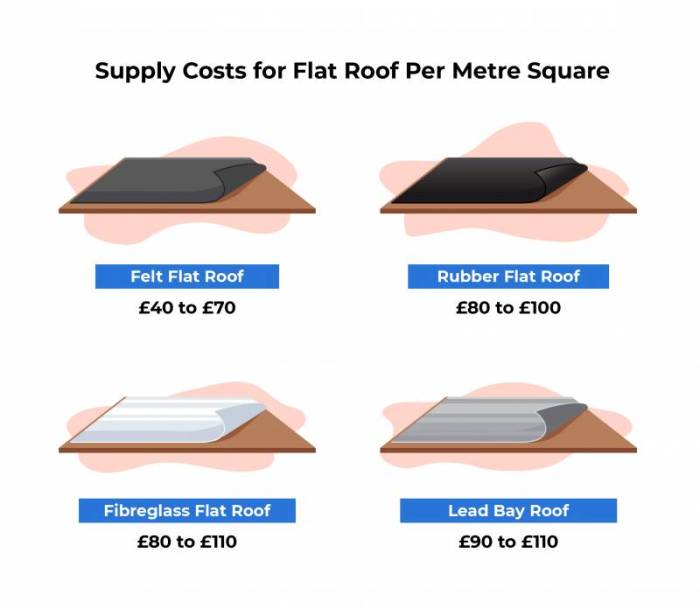
When it comes to flat roof replacement cost, the type of material chosen plays a significant role in determining the overall expenses. Different materials have varying costs, durability, and longevity, which are essential factors to consider before making a decision.EPDM (ethylene propylene diene terpolymer):EPDM is a popular choice for flat roofs due to its durability and weather resistance.
It is a synthetic rubber membrane that is cost-effective and easy to install. The average cost of EPDM roofing is around $4 to $8 per square foot. While the initial cost may be lower compared to other materials, EPDM roofs may require more maintenance over time, potentially increasing replacement costs in the long run.TPO (thermoplastic polyolefin):TPO is another common material used for flat roofs.
It is a single-ply membrane that offers excellent UV resistance and energy efficiency. The cost of TPO roofing typically ranges from $5 to $10 per square foot. TPO roofs are known for their durability and longevity, making them a cost-effective choice in the long term.PVC (polyvinyl chloride):PVC roofing is a durable and waterproof material commonly used for flat roofs.
It has a higher price point compared to EPDM and TPO, with costs ranging from $6 to $12 per square foot. However, PVC roofs are known for their longevity and low maintenance requirements, making them a valuable investment for property owners looking for a long-lasting solution.Built-up roofing (BUR):Built-up roofing consists of multiple layers of bitumen and reinforcing fabrics, creating a strong and waterproof membrane.
The cost of BUR can vary depending on the number of layers and materials used, typically ranging from $5 to $10 per square foot. While BUR roofs have a higher initial cost, they are known for their durability and longevity, making them a popular choice for commercial properties.Each type of flat roof material comes with its own set of cost implications, durability, and longevity factors.
It is essential to consider these aspects carefully when determining the best option for your property to ensure a cost-effective and long-lasting solution.
Average cost breakdown for flat roof replacement
When it comes to the average cost breakdown for flat roof replacement, it's essential to consider various factors that contribute to the overall expenses. Here, we will delve into the categories of materials, labor, permits, and disposal, providing insights on the typical percentage allocation for each cost category and tips on how homeowners can potentially reduce costs in each area.
Materials
Materials typically account for a significant portion of the total cost of flat roof replacement. On average, materials can make up around 40-50% of the total expenses. To reduce costs in this category, homeowners can opt for more budget-friendly materials that still offer durability and quality.
Conducting thorough research and comparing prices from different suppliers can help in finding the best deals without compromising on the quality of materials.
Labor
Labor costs are another crucial aspect of flat roof replacement, usually representing about 30-40% of the total expenditure. Homeowners can potentially reduce labor costs by obtaining multiple quotes from different contractors and negotiating for a competitive price. It's also advisable to choose experienced and reputable professionals who can efficiently complete the job, minimizing the chances of costly mistakes that may lead to additional expenses.
Permits
Permits are necessary for flat roof replacement projects and typically make up around 5-10% of the total cost. To save on permit expenses, homeowners should ensure that all necessary permits are acquired early in the planning process to avoid any delays or fines.
Working with a knowledgeable contractor who can assist in obtaining permits and ensuring compliance with local regulations can help streamline the process and prevent unexpected costs.
Disposal
Disposal costs for removing old roofing materials and waste account for approximately 5-10% of the overall expenditure. Homeowners can reduce disposal expenses by properly segregating recyclable materials and exploring recycling options for old roofing materials. Renting a dumpster or coordinating with the roofing contractor to handle waste disposal efficiently can also help in minimizing disposal costs.
Cost-saving strategies for flat roof replacement
Regular maintenance plays a crucial role in reducing the overall cost of flat roof replacement. By addressing minor issues promptly, you can prevent them from escalating into major problems that require costly repairs or replacements. Proper insulation is another key factor that can lead to long-term cost savings by improving energy efficiency and preventing heat loss or gain.
Investing in cost-effective roofing solutions that offer both durability and affordability can also help minimize replacement expenses.
Benefits of Regular Maintenance
Regular maintenance, such as routine inspections and timely repairs, can extend the lifespan of your flat roof and prevent minor issues from turning into major problems. By addressing leaks, cracks, or damaged areas promptly, you can avoid costly repairs or premature replacement.
Implementing a proactive maintenance plan can help you save money in the long run by maximizing the performance and longevity of your flat roof.
Impact of Proper Insulation
Proper insulation not only enhances the energy efficiency of your building but also contributes to reducing long-term costs associated with heating and cooling. By preventing heat loss in the winter and minimizing heat gain in the summer, adequate insulation can help lower your energy bills and reduce the strain on your HVAC system.
Investing in quality insulation during flat roof replacement can lead to significant cost savings over time.
Cost-Effective Roofing Solutions
When it comes to choosing materials for flat roof replacement, opt for cost-effective solutions that offer a balance between durability and affordability. For example, materials like modified bitumen or TPO (Thermoplastic Polyolefin) roofing membranes are known for their cost-effectiveness and longevity.
These options provide excellent weather resistance and durability, making them ideal choices for budget-conscious property owners. By selecting the right roofing materials that offer a combination of quality and cost-effectiveness, you can achieve a long-lasting and budget-friendly flat roof replacement.
Outcome Summary
In conclusion, navigating the realm of flat roof replacement cost can be complex, but armed with the right information, homeowners can make sound choices that balance quality and affordability. This guide aims to empower readers with the knowledge needed to embark on their roofing projects confidently.
FAQ Guide
How does roof size impact replacement cost?
Roof size directly influences the amount of materials needed and labor costs, resulting in a higher total cost for larger roofs.
Which flat roof material is the most cost-effective?
EPDM is often considered the most cost-effective flat roof material, offering a balance of affordability and durability.
Can homeowners reduce costs through DIY roof replacement?
While some tasks like cleaning and maintenance can be DIY, replacing a flat roof is best left to professionals to ensure quality and safety.
Do different locations impact flat roof replacement costs?
Yes, labor costs can vary based on location due to factors like local regulations, accessibility, and availability of roofing materials.
How can insulation reduce long-term replacement costs?
Proper insulation helps in maintaining temperature control within a property, reducing strain on HVAC systems and potentially extending the lifespan of the roof.